Long-haul EMS 6×4 rigid lorries: which uses the least fuel?
Every model here was simulated by its manufacturer on the EU long haul ems mission, with the payload the regulation sets, and declared to the regulator. Figures are compared only within one reporting year and one payload. A model is ranked when at least ten declared vehicles stand behind its figure.
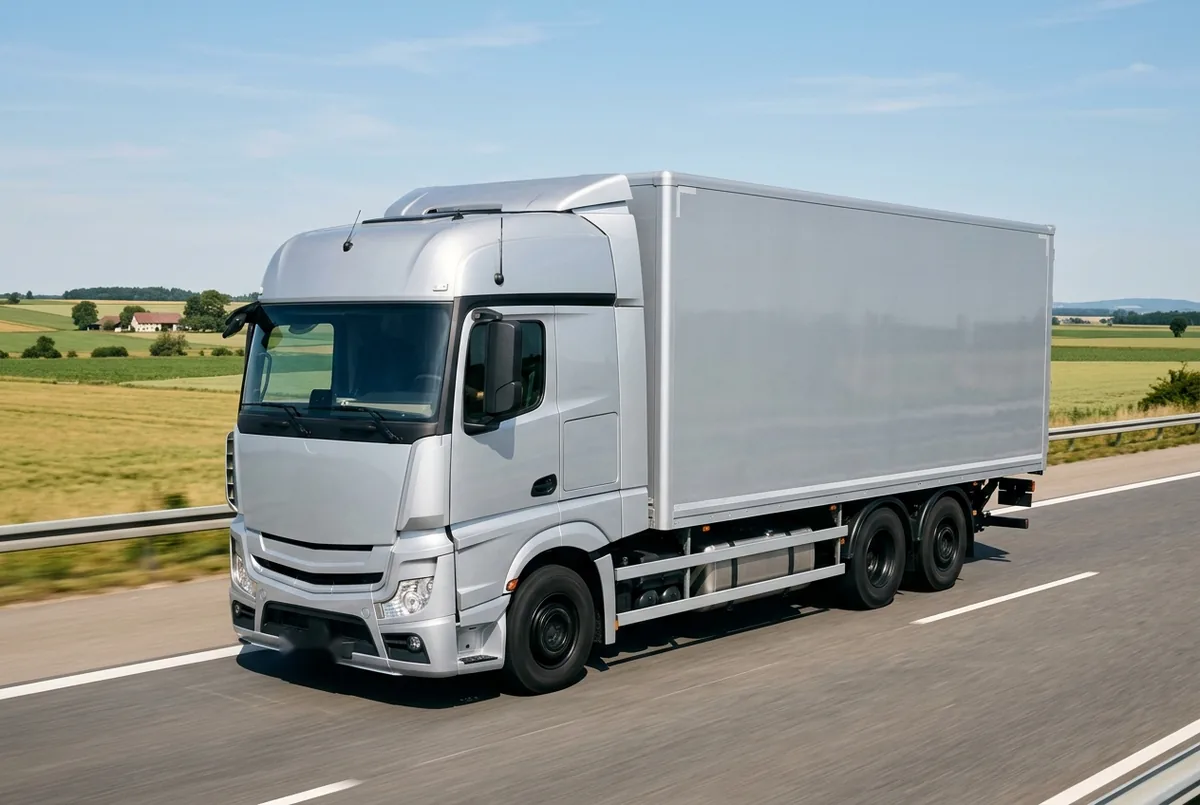
Long-haul EMS 6×4 rigid lorries, 26.5 tonne payload, 2022 declarations
Declared to the regulatorTable view
| Rank | Model | Median l/100 km | Range | Configurations | Vehicles | Median g CO₂/t·km | CO₂ range |
|---|---|---|---|---|---|---|---|
| 1 | Scania P 460 B6x4 | 39.3 | 37.7–40.1 | 10 | 11 | 38.84 | 37.19–39.62 |
| 2 | Scania P 420 B6x4 | 40 | 38.7–42 | 10 | 11 | 39.53 | 38.23–41.49 |
| 3 | Scania R 560 B6x4 | 40.1 | 38.1–42.7 | 48 | 51 | 39.62 | 37.6–42.19 |
| 4 | Scania R 500 B6x4 | 42.1 | 38.3–47.1 | 58 | 70 | 41.61 | 37.8–46.51 |
| 5 | Scania G 450 B6x4 | 42.6 | 41.2–47.5 | 12 | 14 | 42.1 | 40.7–46.9 |
| 6 | Volvo FMX, 323 kW, 6x4 rigid lorry | 43 | 41.2–50.5 | 12 | 15 | 42.42 | 40.71–49.8 |
| 7 | Scania R 530 B6x4 | 43.1 | 41.2–46.7 | 21 | 25 | 42.59 | 40.66–46.08 |
| 8 | Scania R 540 B6x4, lorry (2020–2023) | 43.3 | 41–48.3 | 32 | 32 | 42.7 | 40.53–47.7 |
| 9 | Scania G 500 B6x4 | 43.4 | 38.9–49.5 | 23 | 23 | 42.88 | 38.46–48.8 |
| 10 | Scania P 500 B6x4 | 43.5 | 39.4–58 | 11 | 11 | 42.92 | 38.95–57.3 |
| 10 | Scania R 590 B6x4 | 43.5 | 41–47.5 | 83 | 92 | 42.95 | 40.52–46.9 |
| 12 | Scania R 660 B6x4, lorry (2021–2023) | 43.6 | 41.4–48.9 | 194 | 197 | 43.05 | 40.9–48.3 |
| 13 | Volvo FM, 315 kW, 6x4 rigid lorry | 43.7 | 41.2–49.4 | 11 | 26 | 43.13 | 40.69–48.76 |
| 14 | MAN TGS 26.470 6x4, 6x4, rigid lorry (2020–2023) | 43.9 | 41.9–47.5 | 23 | 23 | 43.39 | 41.33–46.9 |
| 15 | MAN TGS 33.470 6x4, rigid lorry (2020–2023) | 44.2 | 43–49.3 | 19 | 22 | 43.7 | 42.47–48.7 |
| 16 | MAN TGS 26.430 6x4, 6x4 (2020–2023) | 44.4 | 42.4–49.7 | 19 | 20 | 43.8 | 41.86–49 |
| 16 | MAN TGS 26.510 6x4, 6x4, rigid lorry (2020–2023) | 44.4 | 43.2–48.3 | 13 | 13 | 43.84 | 42.65–47.73 |
| 18 | Scania S 660 B6x4 | 44.5 | 41.6–45.8 | 22 | 23 | 43.9 | 41.1–45.21 |
| 19 | MAN TGS 33.510 6x4, rigid lorry (2020–2023) | 44.7 | 43.1–50.7 | 25 | 25 | 44.1 | 42.57–50.1 |
| 19 | MAN TGX 33.510 6x4, rigid lorry (2020–2023) | 44.7 | 42.8–48.2 | 21 | 22 | 44.11 | 42.3–47.6 |
| 19 | Volvo FM, 323 kW, 6x4 rigid lorry | 44.7 | 41.7–49.7 | 12 | 22 | 44.14 | 41.19–49 |
| 22 | MAN TGS 28.430 6x4-4 | 44.8 | 42.1–45.7 | 15 | 26 | 44.2 | 41.52–45.17 |
| 22 | Scania R 660 B6x4, road tractor (2022–2023) | 44.8 | 43.3–48.4 | 16 | 17 | 44.23 | 42.79–47.8 |
| 24 | Mercedes-Benz Actros, 390 kW, 6x4 rigid lorry | 44.9 | 43.2–50.9 | 11 | 14 | 44.31 | 42.65–50.2 |
| 25 | Volvo FH, 345 kW, 6x4 rigid lorry | 45 | 39.3–50.8 | 36 | 47 | 44.45 | 38.82–50.1 |
| 26 | DAF CF 430 FAT | 45.1 | 43.3–48.1 | 10 | 10 | 44.5 | 42.8–47.5 |
| 26 | Scania P 450 B6x4 | 45.1 | 42.9–48.8 | 18 | 20 | 44.6 | 42.37–48.2 |
| 26 | Volvo FM, 345 kW, 6x4 rigid lorry, 12.8 L (2020–2023) | 45.1 | 40.5–47.6 | 14 | 16 | 44.57 | 40–46.99 |
| 26 | Volvo FM, 375 kW, 6x4 rigid lorry | 45.1 | 39.3–49.4 | 25 | 27 | 44.56 | 38.79–48.7 |
| 30 | Volvo FMX, 375 kW, 6x4 rigid lorry | 45.2 | 40.9–49.6 | 34 | 45 | 44.63 | 40.4–49 |
Showing the 30 lowest declared figures of 56 ranked here. Every model has its own page, reached from its make or its range.
What the difference is worth
The lowest and highest ranked here are 14.4 l/100 km apart (36.6%). At 120,000 km a year and an assumed £1.40 a litre, that is about 17,280 litres a year, or £24,192.
Where it stops mattering: 7 models here are within 10% of the lowest figure, inside the tolerance of declared figures, so the ranking between them is not a reason to choose one over another. The specification ordered matters too: declared figures for the Volvo FMX, 345 kW, 6x4 rigid lorry, 12.8 L (2021–2023) alone span 29.8 l/100 km across its configurations.
The price is an assumption for illustration, not a price we track; use your own. Declared figures compare vehicles with each other on a standard route; they are not what one lorry will use on your roads.
26 models not ranked: fewer than ten declared vehicles behind the figure
Declared by each manufacturer under EU heavy-duty CO₂ monitoring (Regulation (EU) 2018/956), simulated with the EU's VECTO tool (Regulation (EU) 2017/2400). Source: European Environment Agency. Payload 26.5 t, reporting period 2022.
Long-haul EMS 6×4 rigid lorries, 3.5 tonne payload, 2022 declarationsLowest: Scania P 460 B6x4, 29.4 l/100 km · 56 models ranked
Long-haul EMS 6×4 rigid lorries, 3.5 tonne payload, 2022 declarations
Declared to the regulatorTable view
| Rank | Model | Median l/100 km | Range | Configurations | Vehicles | Median g CO₂/t·km | CO₂ range |
|---|---|---|---|---|---|---|---|
| 1 | Scania P 460 B6x4 | 29.4 | 28.4–30.8 | 10 | 11 | 219.82 | 212.59–230.13 |
| 2 | Scania R 560 B6x4 | 29.5 | 28.1–32.5 | 48 | 51 | 220.61 | 209.77–242.69 |
| 3 | Scania P 420 B6x4 | 30.9 | 29.2–33.1 | 10 | 11 | 231.07 | 217.96–247.26 |
| 4 | Scania R 500 B6x4 | 31.8 | 28.6–36 | 58 | 70 | 237.52 | 214.15–269.19 |
| 5 | Scania R 540 B6x4, lorry (2020–2023) | 32.2 | 30.2–36.9 | 32 | 32 | 241 | 225.83–275.9 |
| 6 | Scania G 450 B6x4 | 32.3 | 31.6–36.5 | 12 | 14 | 241.5 | 235.97–272.8 |
| 6 | Scania R 530 B6x4 | 32.3 | 31–36.5 | 21 | 25 | 241.37 | 231.71–272.84 |
| 8 | Scania R 660 B6x4, lorry (2021–2023) | 32.4 | 30.9–37.5 | 194 | 197 | 242.17 | 231.17–280.2 |
| 9 | Scania R 590 B6x4 | 32.5 | 30.6–36.9 | 83 | 92 | 243.05 | 229.13–275.9 |
| 10 | Volvo FMX, 323 kW, 6x4 rigid lorry | 32.8 | 31.7–38.8 | 12 | 15 | 245.27 | 237.28–289.9 |
| 11 | Scania G 500 B6x4 | 32.9 | 29.3–37.9 | 23 | 23 | 245.61 | 218.85–283.7 |
| 12 | Scania P 500 B6x4 | 33.1 | 29.7–47 | 11 | 11 | 247.63 | 222.1–351.1 |
| 12 | Scania S 660 B6x4 | 33.1 | 31.4–35.2 | 22 | 23 | 247.5 | 234.61–263.19 |
| 14 | MAN TGS 26.470 6x4, 6x4, rigid lorry (2020–2023) | 33.3 | 31.4–35.4 | 23 | 23 | 249.19 | 235.02–264.6 |
| 15 | Volvo FM, 315 kW, 6x4 rigid lorry | 33.4 | 31.5–39 | 11 | 26 | 249.87 | 235.87–291.84 |
| 16 | MAN TGS 26.430 6x4, 6x4 (2020–2023) | 33.6 | 32.5–38.7 | 19 | 20 | 251.2 | 242.7–289 |
| 16 | MAN TGS 33.470 6x4, rigid lorry (2020–2023) | 33.6 | 32.4–38.6 | 19 | 22 | 251.5 | 242.27–288.2 |
| 18 | MAN TGS 26.510 6x4, 6x4, rigid lorry (2020–2023) | 33.7 | 32.5–38.1 | 13 | 13 | 251.58 | 243.01–284.48 |
| 18 | MAN TGS 28.430 6x4-4 | 33.7 | 32–36 | 15 | 26 | 251.7 | 239.14–269.21 |
| 18 | Scania R 660 B6x4, road tractor (2022–2023) | 33.7 | 32.2–37.4 | 16 | 17 | 251.8 | 241.05–279.9 |
| 21 | DAF CF 430 FAT | 33.9 | 33.1–37.2 | 10 | 10 | 253.7 | 247.44–278.1 |
| 21 | MAN TGX 33.510 6x4, rigid lorry (2020–2023) | 33.9 | 32.6–37.2 | 21 | 22 | 253.53 | 243.62–277.9 |
| 21 | Volvo FM, 375 kW, 6x4 rigid lorry | 33.9 | 30.3–37.4 | 25 | 27 | 253.6 | 226.25–279.8 |
| 24 | MAN TGS 33.510 6x4, rigid lorry (2020–2023) | 34.2 | 32.5–38.8 | 25 | 25 | 255.55 | 242.62–289.9 |
| 24 | Volvo FH, 345 kW, 6x4 rigid lorry | 34.2 | 30.3–38.7 | 36 | 47 | 255.67 | 226.5–289.1 |
| 26 | Volvo FMX, 375 kW, 6x4 rigid lorry | 34.3 | 31.2–38.3 | 34 | 45 | 256.55 | 233.55–286.56 |
| 27 | Scania P 450 B6x4 | 34.4 | 32.5–38.7 | 18 | 20 | 257.4 | 242.69–289.68 |
| 28 | Volvo FM, 345 kW, 6x4 rigid lorry, 12.8 L (2020–2023) | 34.5 | 31–36.6 | 14 | 16 | 257.8 | 231.7–273.89 |
| 29 | Scania S 770 B6x4 | 34.7 | 33–37.3 | 18 | 18 | 259.7 | 246.47–278.91 |
| 30 | Volvo FM, 323 kW, 6x4 rigid lorry | 34.8 | 32.1–38 | 12 | 22 | 260.27 | 240.1–284.4 |
Showing the 30 lowest declared figures of 56 ranked here. Every model has its own page, reached from its make or its range.
What the difference is worth
The lowest and highest ranked here are 13.3 l/100 km apart (45.2%). At 120,000 km a year and an assumed £1.40 a litre, that is about 15,960 litres a year, or £22,344.
Where it stops mattering: 7 models here are within 10% of the lowest figure, inside the tolerance of declared figures, so the ranking between them is not a reason to choose one over another. The specification ordered matters too: declared figures for the Volvo FMX, 345 kW, 6x4 rigid lorry, 12.8 L (2021–2023) alone span 26.8 l/100 km across its configurations.
The price is an assumption for illustration, not a price we track; use your own. Declared figures compare vehicles with each other on a standard route; they are not what one lorry will use on your roads.
26 models not ranked: fewer than ten declared vehicles behind the figure
Declared by each manufacturer under EU heavy-duty CO₂ monitoring (Regulation (EU) 2018/956), simulated with the EU's VECTO tool (Regulation (EU) 2017/2400). Source: European Environment Agency. Payload 3.5 t, reporting period 2022.
Earlier reporting periods
The same comparison on earlier declarations. Rankings are never mixed across years.
Long-haul EMS 6×4 rigid lorries, 26.5 tonne payload, 2021 declarationsLowest: Scania R 450 B6x4, 43.2 l/100 km · 56 models ranked
Long-haul EMS 6×4 rigid lorries, 26.5 tonne payload, 2021 declarations
Declared to the regulatorTable view
| Rank | Model | Median l/100 km | Range | Configurations | Vehicles | Median g CO₂/t·km | CO₂ range |
|---|---|---|---|---|---|---|---|
| 1 | Scania R 450 B6x4 | 43.2 | 41.9–47.2 | 13 | 15 | 42.7 | 41.4–46.6 |
| 2 | Scania G 450 B6x4 | 44.2 | 42.7–50.6 | 12 | 16 | 43.7 | 42.2–49.9 |
| 3 | Scania G 410 B6x4 | 44.3 | 41.9–49.9 | 9 | 10 | 43.7 | 41.4–49.3 |
| 4 | Scania R 530 B6x4 | 44.4 | 42.5–47.8 | 11 | 13 | 43.9 | 41.9–47.2 |
| 5 | Scania R 540 B6x4, lorry (2020–2023) | 44.6 | 42.3–49.2 | 54 | 56 | 44 | 41.8–48.6 |
| 5 | Scania R 590 B6x4 | 44.6 | 42.4–48.2 | 37 | 39 | 44.1 | 41.9–47.6 |
| 7 | MAN TGS 33.430 6x4, rigid lorry (2020–2023) | 44.7 | 43.7–50.2 | 12 | 12 | 44.2 | 43.2–49.6 |
| 8 | Scania P 450 B6x4 | 44.8 | 41.9–47.4 | 16 | 22 | 44.3 | 41.4–46.8 |
| 8 | Scania R 500 B6x4 | 44.8 | 42.5–49.5 | 31 | 31 | 44.2 | 41.9–48.9 |
| 10 | Scania R 660 B6x4, lorry (2021–2023) | 44.9 | 43.4–48.2 | 93 | 100 | 44.3 | 42.88–47.6 |
| 11 | Scania G 500 B6x4 | 45.3 | 42.6–51 | 24 | 24 | 44.7 | 42.1–50.4 |
| 12 | DAF CF 480 FAT | 45.5 | 44.7–49.3 | 28 | 45 | 44.9 | 44.2–48.7 |
| 12 | MAN TGS 26.430 6x4, 6x4 (2020–2023) | 45.5 | 43–51.8 | 17 | 19 | 44.9 | 42.5–51.1 |
| 12 | Scania P 410 B6x4 | 45.5 | 43.7–50.3 | 26 | 34 | 44.9 | 43.2–49.6 |
| 15 | MAN TGS 26.470 6x4, 6x4, rigid lorry (2020–2023) | 45.6 | 43–54.7 | 15 | 15 | 45 | 42.5–54 |
| 16 | MAN TGX 26.510 6x4, rigid lorry (2020–2023) | 45.7 | 44.4–47.1 | 11 | 11 | 45.1 | 43.8–46.5 |
| 17 | DAF CF 530 FAT | 45.9 | 44.8–49 | 11 | 12 | 45.3 | 44.2–48.3 |
| 18 | MAN TGS 26.510 6x4, 6x4, rigid lorry (2020–2023) | 46.2 | 43.6–49.2 | 14 | 14 | 45.6 | 43.1–48.6 |
| 18 | MAN TGX 33.510 6x4, rigid lorry (2020–2023) | 46.2 | 45–46.7 | 29 | 30 | 45.6 | 44.4–46.1 |
| 20 | DAF XF 530 FAT | 46.3 | 44.3–54.8 | 23 | 26 | 45.8 | 43.7–54.1 |
| 21 | Volvo FMX, 375 kW, 6x4 rigid lorry | 46.4 | 44.6–68.1 | 44 | 67 | 45.8 | 44–67.2 |
| 22 | Volvo FMX, 315 kW, 6x4 rigid lorry | 46.7 | 45.5–50.4 | 16 | 16 | 46.1 | 45–49.8 |
| 23 | Volvo FMX, 345 kW, 6x4 rigid lorry, 12.8 L (2021–2023) | 46.8 | 45.5–53.6 | 64 | 69 | 46.2 | 44.9–52.9 |
| 24 | MAN TGS 33.470 6x4, rigid lorry (2020–2023) | 46.9 | 44.1–50.7 | 19 | 19 | 46.3 | 43.6–50.1 |
| 24 | Volvo FM, 345 kW, 6x4 rigid lorry, 12.8 L (2020–2023) | 46.9 | 43.5–55.1 | 26 | 28 | 46.3 | 43–54.4 |
| 26 | Mercedes-Benz Actros, 315 kW, 6x4 rigid lorry | 47 | 45.1–52.5 | 10 | 10 | 46.4 | 44.5–51.9 |
| 26 | Volvo FM, 345 kW, 6x4 rigid lorry, 10.8 L (2020–2023) | 47 | 46.1–48.6 | 10 | 11 | 46.4 | 45.6–48 |
| 28 | Volvo FM, 375 kW, 6x4 rigid lorry | 47.1 | 44.9–55 | 18 | 19 | 46.5 | 44.4–54.3 |
| 28 | Volvo FMX, 323 kW, 6x4 rigid lorry | 47.1 | 44.7–47.9 | 13 | 13 | 46.5 | 44.2–47.3 |
| 30 | MAN TGS 33.510 6x4, rigid lorry (2020–2023) | 47.2 | 44–51.3 | 19 | 19 | 46.6 | 43.5–50.6 |
Showing the 30 lowest declared figures of 56 ranked here. Every model has its own page, reached from its make or its range.
What the difference is worth
The lowest and highest ranked here are 11.6 l/100 km apart (26.8%). At 120,000 km a year and an assumed £1.40 a litre, that is about 13,920 litres a year, or £19,488.
Where it stops mattering: 35 models here are within 10% of the lowest figure, inside the tolerance of declared figures, so the ranking between them is not a reason to choose one over another. The specification ordered matters too: declared figures for the Volvo FMX, 375 kW, 6x4 rigid lorry alone span 23.5 l/100 km across its configurations.
The price is an assumption for illustration, not a price we track; use your own. Declared figures compare vehicles with each other on a standard route; they are not what one lorry will use on your roads.
25 models not ranked: fewer than ten declared vehicles behind the figure
Declared by each manufacturer under EU heavy-duty CO₂ monitoring (Regulation (EU) 2018/956), simulated with the EU's VECTO tool (Regulation (EU) 2017/2400). Source: European Environment Agency. Payload 26.5 t, reporting period 2021.
Long-haul EMS 6×4 rigid lorries, 3.5 tonne payload, 2021 declarationsLowest: Scania R 450 B6x4, 32.4 l/100 km · 56 models ranked
Long-haul EMS 6×4 rigid lorries, 3.5 tonne payload, 2021 declarations
Declared to the regulatorTable view
| Rank | Model | Median l/100 km | Range | Configurations | Vehicles | Median g CO₂/t·km | CO₂ range |
|---|---|---|---|---|---|---|---|
| 1 | Scania R 450 B6x4 | 32.4 | 31.6–36 | 13 | 15 | 241.9 | 236.6–268.9 |
| 2 | Scania R 530 B6x4 | 33 | 32–36.5 | 11 | 13 | 246.4 | 239.1–272.7 |
| 3 | Scania G 450 B6x4 | 33.2 | 32.4–40.2 | 12 | 16 | 248.3 | 242–300.6 |
| 3 | Scania R 590 B6x4 | 33.2 | 31.9–37.1 | 37 | 39 | 247.8 | 238.6–277.6 |
| 5 | Scania R 540 B6x4, lorry (2020–2023) | 33.4 | 31.5–37.6 | 54 | 56 | 249.4 | 235.3–280.9 |
| 5 | Scania R 660 B6x4, lorry (2021–2023) | 33.4 | 32.1–36.9 | 93 | 100 | 249.3 | 240.09–276.2 |
| 7 | Scania G 410 B6x4 | 33.5 | 32–38.5 | 9 | 10 | 250.8 | 239.1–287.6 |
| 7 | Scania R 500 B6x4 | 33.5 | 31.8–37.6 | 31 | 31 | 250.6 | 238–281.1 |
| 9 | MAN TGS 33.430 6x4, rigid lorry (2020–2023) | 33.8 | 32.6–39 | 12 | 12 | 252.7 | 244.1–291.6 |
| 9 | Scania G 500 B6x4 | 33.8 | 31.4–39.8 | 24 | 24 | 252.5 | 234.5–297.4 |
| 11 | Scania P 450 B6x4 | 33.9 | 31.6–36.5 | 16 | 22 | 253.2 | 236.6–272.7 |
| 12 | DAF CF 480 FAT | 34.2 | 33.6–38.3 | 28 | 45 | 255.3 | 251.3–286.4 |
| 13 | MAN TGS 26.430 6x4, 6x4 (2020–2023) | 34.3 | 32.4–40 | 17 | 19 | 256.5 | 242.5–299.2 |
| 14 | MAN TGX 26.510 6x4, rigid lorry (2020–2023) | 34.4 | 33.3–35.4 | 11 | 11 | 257.5 | 248.9–264.8 |
| 15 | DAF CF 530 FAT | 34.5 | 33.6–37.5 | 11 | 12 | 257.6 | 251.3–280.2 |
| 15 | MAN TGS 26.510 6x4, 6x4, rigid lorry (2020–2023) | 34.5 | 32.6–37 | 14 | 14 | 257.9 | 243.4–276.3 |
| 17 | MAN TGS 26.470 6x4, 6x4, rigid lorry (2020–2023) | 34.6 | 32.6–43.4 | 15 | 15 | 258.7 | 243.6–324.7 |
| 17 | Volvo FMX, 375 kW, 6x4 rigid lorry | 34.6 | 33.5–56 | 44 | 67 | 258.3 | 250.4–418.8 |
| 19 | MAN TGX 33.510 6x4, rigid lorry (2020–2023) | 34.8 | 33.9–35.1 | 29 | 30 | 260.3 | 253.2–262.5 |
| 20 | DAF XF 530 FAT | 34.9 | 33.4–43.7 | 23 | 26 | 260.7 | 249.6–326.8 |
| 20 | Scania P 410 B6x4 | 34.9 | 33.5–39.7 | 26 | 34 | 260.8 | 250.5–296.5 |
| 22 | Volvo FMX, 345 kW, 6x4 rigid lorry, 12.8 L (2021–2023) | 35.3 | 34–42.2 | 64 | 69 | 264.1 | 254.5–315.6 |
| 23 | Volvo FM, 375 kW, 6x4 rigid lorry | 35.4 | 34–43.3 | 18 | 19 | 264.3 | 254–324 |
| 23 | Volvo FMX, 315 kW, 6x4 rigid lorry | 35.4 | 34.3–38.8 | 16 | 16 | 264.4 | 256.3–290 |
| 23 | Volvo FMX, 323 kW, 6x4 rigid lorry | 35.4 | 33.9–36.3 | 13 | 13 | 264.9 | 253.3–271.4 |
| 26 | MAN TGS 33.470 6x4, rigid lorry (2020–2023) | 35.5 | 33.1–39.4 | 19 | 19 | 265.1 | 247.4–294.7 |
| 26 | MAN TGS 33.510 6x4, rigid lorry (2020–2023) | 35.5 | 32.8–39 | 19 | 19 | 265.7 | 245.1–291.9 |
| 26 | Volvo FM, 345 kW, 6x4 rigid lorry, 12.8 L (2020–2023) | 35.5 | 33.1–43.7 | 26 | 28 | 265.6 | 247.6–326.9 |
| 29 | Volvo FMX, 405 kW, 6x4 rigid lorry | 35.6 | 34.5–39.5 | 20 | 22 | 266.2 | 257.9–295.1 |
| 30 | Volvo FH, 345 kW, 6x4 rigid lorry | 35.7 | 34.3–38.9 | 28 | 41 | 266.5 | 256.6–291.2 |
Showing the 30 lowest declared figures of 56 ranked here. Every model has its own page, reached from its make or its range.
What the difference is worth
The lowest and highest ranked here are 11.5 l/100 km apart (35.4%). At 120,000 km a year and an assumed £1.40 a litre, that is about 13,800 litres a year, or £19,320.
Where it stops mattering: 29 models here are within 10% of the lowest figure, inside the tolerance of declared figures, so the ranking between them is not a reason to choose one over another. The specification ordered matters too: declared figures for the Volvo FMX, 375 kW, 6x4 rigid lorry alone span 22.5 l/100 km across its configurations.
The price is an assumption for illustration, not a price we track; use your own. Declared figures compare vehicles with each other on a standard route; they are not what one lorry will use on your roads.
25 models not ranked: fewer than ten declared vehicles behind the figure
Declared by each manufacturer under EU heavy-duty CO₂ monitoring (Regulation (EU) 2018/956), simulated with the EU's VECTO tool (Regulation (EU) 2017/2400). Source: European Environment Agency. Payload 3.5 t, reporting period 2021.
Long-haul EMS 6×4 rigid lorries, 26.5 tonne payload, 2020 declarationsLowest: Scania R 450 B6x4, 43.8 l/100 km · 35 models ranked
Long-haul EMS 6×4 rigid lorries, 26.5 tonne payload, 2020 declarations
Declared to the regulatorTable view
| Rank | Model | Median l/100 km | Range | Configurations | Vehicles | Median g CO₂/t·km | CO₂ range |
|---|---|---|---|---|---|---|---|
| 1 | Scania R 450 B6x4 | 43.8 | 43–49.3 | 14 | 15 | 43.3 | 42.4–48.7 |
| 2 | Scania R 540 B6x4, lorry (2020–2023) | 45.2 | 42.2–50.3 | 46 | 49 | 44.6 | 41.7–49.6 |
| 3 | Scania R 500 B6x4 | 45.3 | 43.3–49.8 | 42 | 43 | 44.7 | 42.8–49.2 |
| 4 | MAN TGS 26.430 6x4, 6x4 (2020–2023) | 45.4 | 43–53.1 | 33 | 35 | 44.9 | 42.5–52.5 |
| 5 | DAF CF 480 FAT | 45.5 | 44.8–49.4 | 12 | 12 | 44.9 | 44.3–48.8 |
| 5 | Scania R 520 B6x4 | 45.5 | 43.4–49.1 | 13 | 14 | 44.9 | 42.9–48.5 |
| 7 | Scania G 500 B6x4 | 45.7 | 43.3–51 | 16 | 19 | 45.1 | 42.8–50.4 |
| 8 | Scania P 410 B6x4 | 45.8 | 44.1–52.4 | 21 | 28 | 45.2 | 43.5–51.8 |
| 8 | Scania P 450 B6x4 | 45.8 | 44.6–53.7 | 16 | 25 | 45.2 | 44–53 |
| 10 | MAN TGS 33.470 6x4, rigid lorry (2020–2023) | 45.9 | 44.6–49.2 | 17 | 17 | 45.4 | 44.1–48.6 |
| 11 | Scania G 450 B6x4 | 46 | 43.1–50.6 | 18 | 20 | 45.4 | 42.6–50 |
| 12 | MAN TGS 26.470 6x4, 6x4, rigid lorry (2020–2023) | 46.2 | 44–49.3 | 26 | 29 | 45.6 | 43.4–48.7 |
| 13 | MAN TGX 26.510 6x4, rigid lorry (2020–2023) | 46.6 | 44.8–48 | 22 | 23 | 46 | 44.3–47.4 |
| 13 | Mercedes-Benz Actros, 375 kW, 6x4 rigid lorry | 46.6 | 46.6–49.9 | 4 | 10 | 46 | 46–49.3 |
| 15 | MAN TGS 26.510 6x4, 6x4, rigid lorry (2020–2023) | 46.8 | 45–48.8 | 29 | 29 | 46.2 | 44.5–48.2 |
| 15 | MAN TGS 33.430 6x4, rigid lorry (2020–2023) | 46.8 | 44.5–50.6 | 14 | 14 | 46.2 | 43.9–50 |
| 17 | Volvo FM, 345 kW, 6x4 rigid lorry, 12.8 L (2020–2023) | 46.9 | 42.8–54.8 | 58 | 75 | 46.3 | 42.3–54.1 |
| 18 | MAN TGS 33.510 6x4, rigid lorry (2020–2023) | 47.5 | 45.3–52.6 | 15 | 15 | 46.9 | 44.8–51.9 |
| 18 | Scania R 770 B6x4, lorry (2021–2023) | 47.5 | 45.4–52.1 | 30 | 30 | 46.9 | 44.8–51.4 |
| 18 | Volvo FH, 345 kW, 6x4 rigid lorry | 47.5 | 45.5–49.9 | 21 | 26 | 46.9 | 44.9–49.3 |
| 21 | Volvo FM, 315 kW, 6x4 rigid lorry | 47.7 | 42.5–59.2 | 40 | 58 | 47.1 | 41.9–58.4 |
| 22 | Scania R 650 B6x4, lorry (2020–2021) | 47.8 | 45.8–55 | 189 | 197 | 47.2 | 45.2–54.3 |
| 23 | Volvo FM, 323 kW, 6x4 rigid lorry | 48.2 | 46.3–57.3 | 19 | 21 | 47.6 | 45.8–56.6 |
| 24 | MAN TGX 33.510 6x4, rigid lorry (2020–2023) | 48.4 | 45.7–54.3 | 21 | 24 | 47.8 | 45.1–53.6 |
| 25 | MAN TGX 26.580 6x4, rigid lorry (2020–2023) | 48.6 | 47.7–50.2 | 12 | 12 | 48 | 47.1–49.6 |
| 26 | Volvo FM, 375 kW, 6x4 rigid lorry | 49.3 | 46–56.4 | 28 | 37 | 48.6 | 45.4–55.7 |
| 27 | Scania S 650 B6x4 | 49.6 | 47.5–53.9 | 21 | 21 | 49 | 46.9–53.3 |
| 28 | MAN TGX 33.580 6x4, rigid lorry (2020–2023) | 49.8 | 47.9–51.1 | 9 | 10 | 49.2 | 47.3–50.4 |
| 29 | Scania R 650 B6x4, road tractor (2020–2021) | 49.9 | 46.2–52.7 | 14 | 14 | 49.3 | 45.6–52 |
| 30 | Volvo FH, 552 kW, 6x4 rigid lorry (2020–2023) | 50.2 | 47.3–54 | 44 | 45 | 49.6 | 46.7–53.3 |
Showing the 30 lowest declared figures of 35 ranked here. Every model has its own page, reached from its make or its range.
What the difference is worth
The lowest and highest ranked here are 10.8 l/100 km apart (24.6%). At 120,000 km a year and an assumed £1.40 a litre, that is about 12,960 litres a year, or £18,144.
Where it stops mattering: 22 models here are within 10% of the lowest figure, inside the tolerance of declared figures, so the ranking between them is not a reason to choose one over another. The specification ordered matters too: declared figures for the Volvo FM, 315 kW, 6x4 rigid lorry alone span 16.7 l/100 km across its configurations.
The price is an assumption for illustration, not a price we track; use your own. Declared figures compare vehicles with each other on a standard route; they are not what one lorry will use on your roads.
38 models not ranked: fewer than ten declared vehicles behind the figure
8 more are not listed here; each has its own page.
Declared by each manufacturer under EU heavy-duty CO₂ monitoring (Regulation (EU) 2018/956), simulated with the EU's VECTO tool (Regulation (EU) 2017/2400). Source: European Environment Agency. Payload 26.5 t, reporting period 2020.
Long-haul EMS 6×4 rigid lorries, 3.5 tonne payload, 2020 declarationsLowest: Scania R 450 B6x4, 32.8 l/100 km · 35 models ranked
Long-haul EMS 6×4 rigid lorries, 3.5 tonne payload, 2020 declarations
Declared to the regulatorTable view
| Rank | Model | Median l/100 km | Range | Configurations | Vehicles | Median g CO₂/t·km | CO₂ range |
|---|---|---|---|---|---|---|---|
| 1 | Scania R 450 B6x4 | 32.8 | 32.2–38 | 14 | 15 | 244.9 | 241.1–283.8 |
| 2 | Scania R 540 B6x4, lorry (2020–2023) | 33.7 | 31.7–38.4 | 46 | 49 | 251.7 | 237–286.9 |
| 3 | Scania R 500 B6x4 | 33.8 | 32.2–37.8 | 42 | 43 | 252.4 | 240.7–282.9 |
| 4 | Scania G 500 B6x4 | 34.1 | 32.6–39.5 | 16 | 19 | 255.3 | 243.7–295.3 |
| 5 | DAF CF 480 FAT | 34.2 | 33.7–38.2 | 12 | 12 | 255.5 | 252.1–285.9 |
| 6 | MAN TGS 26.430 6x4, 6x4 (2020–2023) | 34.3 | 32.3–41.4 | 33 | 35 | 256.1 | 241.8–309.7 |
| 7 | MAN TGS 33.470 6x4, rigid lorry (2020–2023) | 34.4 | 33.4–37.7 | 17 | 17 | 256.9 | 249.9–282.1 |
| 7 | Scania G 450 B6x4 | 34.4 | 32.6–40.2 | 18 | 20 | 257.2 | 243.8–300.9 |
| 9 | Scania P 450 B6x4 | 34.5 | 33.5–42.9 | 16 | 25 | 258.2 | 250.6–320.5 |
| 10 | Scania R 520 B6x4 | 34.6 | 33–38 | 13 | 14 | 259 | 246.6–283.9 |
| 11 | MAN TGS 26.470 6x4, 6x4, rigid lorry (2020–2023) | 35.1 | 32.9–38.7 | 26 | 29 | 262.1 | 246–289 |
| 11 | MAN TGS 26.510 6x4, 6x4, rigid lorry (2020–2023) | 35.1 | 33.5–36.9 | 29 | 29 | 262.3 | 250.5–276 |
| 11 | MAN TGX 26.510 6x4, rigid lorry (2020–2023) | 35.1 | 33.3–36.2 | 22 | 23 | 262.5 | 249.1–270.4 |
| 14 | Scania P 410 B6x4 | 35.3 | 33.6–41.9 | 21 | 28 | 263.7 | 251–313.6 |
| 15 | MAN TGS 33.430 6x4, rigid lorry (2020–2023) | 35.4 | 33.8–38.7 | 14 | 14 | 264.9 | 252.8–289.7 |
| 16 | MAN TGS 33.510 6x4, rigid lorry (2020–2023) | 35.6 | 33.8–40.5 | 15 | 15 | 266.3 | 252.4–302.9 |
| 16 | Mercedes-Benz Actros, 375 kW, 6x4 rigid lorry | 35.6 | 35.6–38.5 | 4 | 10 | 266.2 | 266.1–288 |
| 16 | Volvo FM, 345 kW, 6x4 rigid lorry, 12.8 L (2020–2023) | 35.6 | 32.6–43.6 | 58 | 75 | 266.2 | 243.5–326 |
| 19 | Scania R 770 B6x4, lorry (2021–2023) | 35.7 | 33.6–40.5 | 30 | 30 | 266.9 | 251–302.6 |
| 20 | Volvo FH, 345 kW, 6x4 rigid lorry | 35.9 | 34.2–38.5 | 21 | 26 | 268.2 | 255.7–287.5 |
| 21 | Scania R 650 B6x4, lorry (2020–2021) | 36.1 | 33.9–43.1 | 189 | 197 | 269.9 | 253.8–322.2 |
| 22 | MAN TGX 33.510 6x4, rigid lorry (2020–2023) | 36.4 | 34.2–42.7 | 21 | 24 | 272.2 | 255.8–319 |
| 23 | Volvo FM, 323 kW, 6x4 rigid lorry | 36.5 | 34.6–45.9 | 19 | 21 | 272.5 | 258.6–343.3 |
| 24 | Volvo FM, 315 kW, 6x4 rigid lorry | 36.8 | 32.4–48.2 | 40 | 58 | 275.4 | 242.2–360.2 |
| 25 | MAN TGX 26.580 6x4, rigid lorry (2020–2023) | 37.3 | 36.4–39 | 12 | 12 | 278.8 | 271.8–291.4 |
| 26 | Scania S 650 B6x4 | 37.6 | 35.7–41.6 | 21 | 21 | 280.8 | 267.2–310.8 |
| 27 | Volvo FM, 375 kW, 6x4 rigid lorry | 37.8 | 34.5–44.5 | 28 | 37 | 282.8 | 257.7–333 |
| 28 | Scania R 650 B6x4, road tractor (2020–2021) | 37.9 | 34.8–40.3 | 14 | 14 | 283.2 | 260–301.2 |
| 29 | Volvo FH, 552 kW, 6x4 rigid lorry (2020–2023) | 38 | 35.9–42.1 | 44 | 45 | 283.9 | 268.5–314.6 |
| 30 | MAN TGX 33.580 6x4, rigid lorry (2020–2023) | 38.2 | 37–40.2 | 9 | 10 | 285.9 | 276.4–300.7 |
Showing the 30 lowest declared figures of 35 ranked here. Every model has its own page, reached from its make or its range.
What the difference is worth
The lowest and highest ranked here are 10.8 l/100 km apart (32.9%). At 120,000 km a year and an assumed £1.40 a litre, that is about 12,960 litres a year, or £18,144.
Where it stops mattering: 20 models here are within 10% of the lowest figure, inside the tolerance of declared figures, so the ranking between them is not a reason to choose one over another. The specification ordered matters too: declared figures for the Volvo FM, 315 kW, 6x4 rigid lorry alone span 15.8 l/100 km across its configurations.
The price is an assumption for illustration, not a price we track; use your own. Declared figures compare vehicles with each other on a standard route; they are not what one lorry will use on your roads.
38 models not ranked: fewer than ten declared vehicles behind the figure
8 more are not listed here; each has its own page.
Declared by each manufacturer under EU heavy-duty CO₂ monitoring (Regulation (EU) 2018/956), simulated with the EU's VECTO tool (Regulation (EU) 2017/2400). Source: European Environment Agency. Payload 3.5 t, reporting period 2020.